
♫: Amateur Dramatics
An embarrassment of embarrassments

Mona Fastvold’s film The Testament of Ann Lee finally made it to Melbourne. I’d been excited to see it since the first confounded responses came trickling out of the Venice premiere, and dropped $30 AUD (roughly two plastic buttons in USD) to watch it in 70mm. Alone. (Prue got to go to a special screening a week earlier). This is not a movie review.
Popular Music loves the Shakers; we love their whole puritanical/pathological deal. Everybody does.
We lived for a time in a converted barn in Upstate New York, in close proximity to the Hancock Shaker Village — a living monument to the movement, closer to our home than the nearest grocery store. The Shakers became a weirdly central part of our psychic space for about a year and a half — a source of solace, an aspirational ideal. It’s worth noting also that we were both kind of going mad at the time.
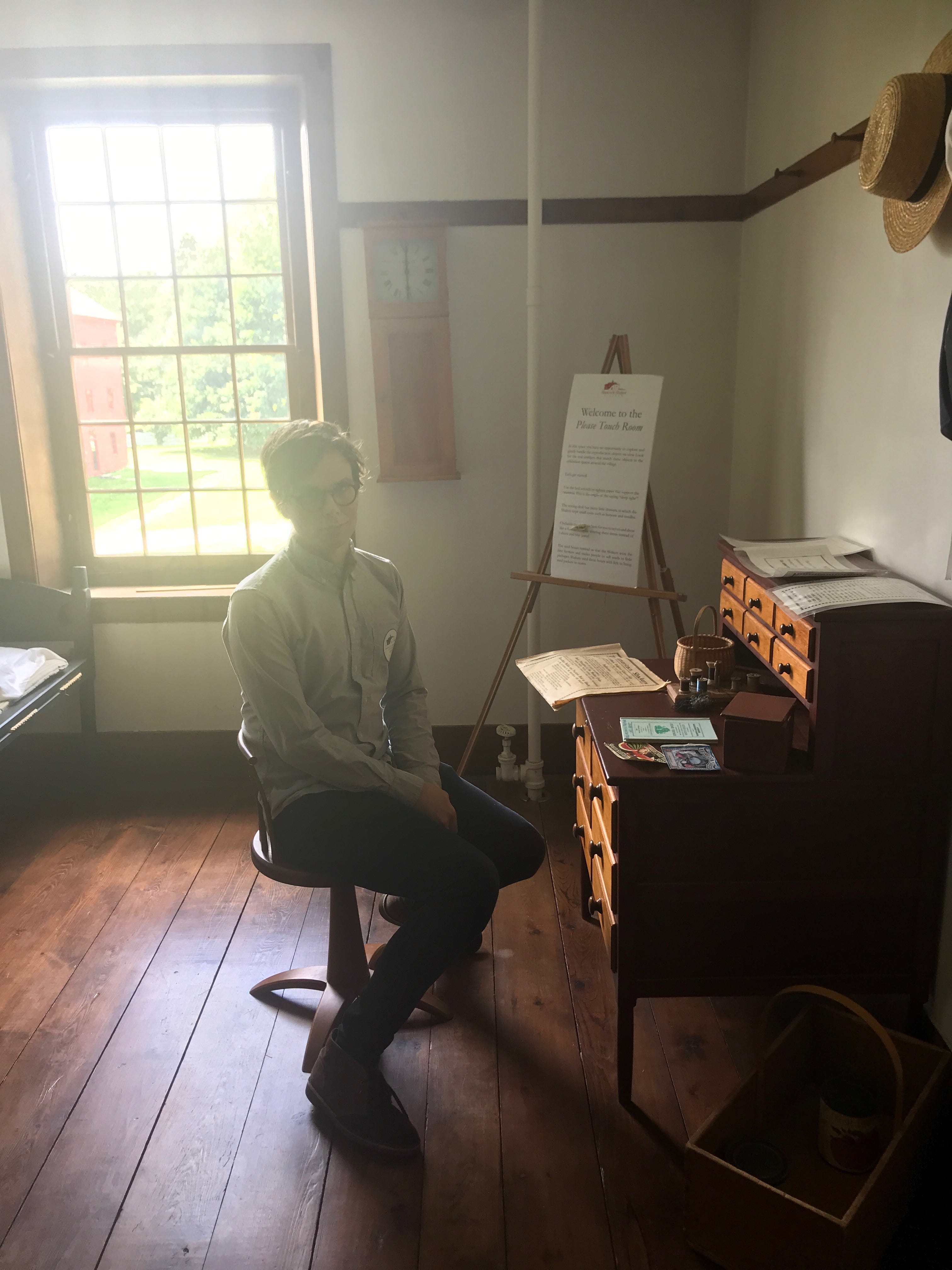
I first became acquainted with the Shaker Movement when I working on a theater piece called “The Dorothy K,” with a group called Implied Violence. The Shakers were key to the show's dramaturgy, their ecstasies and their devotions, the simple, ascetic ideal of worship through creation — where art and furniture and song were not made but received, the self emptied out in devotion, the maker disappearing into the work, leaving behind only the gift.
Anyway, Daniel Blumberg’s Shaker interpolations for the movie got me thinking about the music for “The Dorothy K,” which I wrote in collaboration with composer Brian Lawlor.
“The Plague of Marcus” (Parenthetical Girls version)
The show premiered in 2008 (Jesus Christ) as part of the New Island Festival, curated by Robert Wilson and The Watermill Center, and was staged in a few iterations: at Donau Festival in Austria, at the Guggenheim. I don’t look back at this period with much fondness. This far along, I don’t have much to say about the experience: I worked with a few very lovely people, I can tell you what it feels like to be bled by leeches, I know what it’s like to be anesthetized by an ether-soaked rag night after night. I got off pretty easy.
Regarding the songs: in keeping with the show’s source materials, the lyrics were largely assembled from a few texts — Shaker Hymns, the existing traces of director Erich von Stroheim’s lost epic Greed, the Old Testament, MacBeth (for some reason), and Horace McCoy’s novel They Shoot Horses, Don't They?. Then as today, I had no idea what I was doing. Many years later, Brian got a grant to document the songs, so I flew out to Jersey to record vocals in a basement studio in Hoboken, with the help of Ryan Kelly. The recordings were released as Always & Only the Lonely: Music from The Dorothy K.

Confession: I don’t really like these songs. In both the text and the execution, I just find the whole business a little embarrassing. This isn’t a reflection on any part of the project outside of myself — I think Brian and Ryan did fine work — I just don’t think I did a very good job.
So why bother to surface them? With a few rare exceptions, I find basically everything I’ve ever done kind of embarrassing. Historically, it takes roughly 18 months for any pride I have in a thing to curdle into shame. This includes all the things that people have told me meant something to them. My art practice, such as it is, is basically an exercise in outpacing the indignity of my past work.
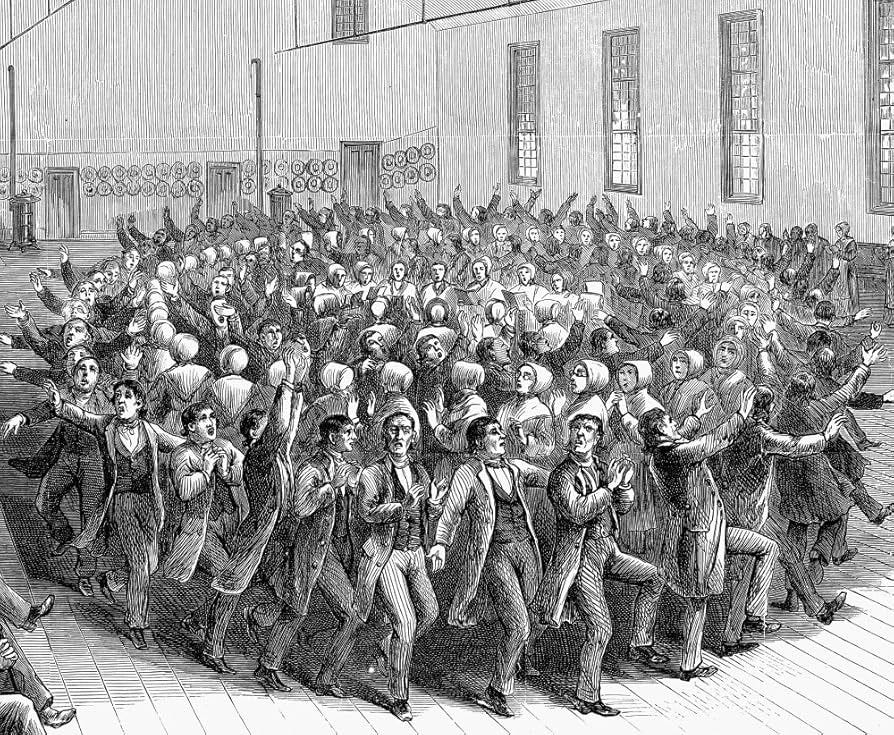
But I’ve been thinking about The Shakers. The Shakers believed in consecrated labor — that washing dishes or carving a drawer joint or writing songs were all the same act, just performed in different registers. The songs were not elevated above the dishwater. Everything was consecrated, or nothing was — which is another way of saying nothing is precious. Pride and embarrassment are manifestations of the same impulse: a pair of identical hands reaching back to reclaim something you’ve already given away. And yet.
A few people over the years have mentioned that these songs mean something to them, and I'm trying to believe — though not entirely successfully — that it’s not really my place to say whether they are good or bad anymore. In the least grandiose terms possible: if the song means something to someone, it’s already been consecrated in the only way that’s meant to matter. Maybe you’ll like them more than I do. It’s none of my business.
“Possession Sound” by Zac Pennington
While we’re here, another rogue song from the past with musical theatre ambitions. This is a whole different story. I secretly like this one a bit — Jherek did a great job as usual, and I think the opening couplet (soak up the blood from the carpet / wash what’s left of his head) still sounds pretty hardcore.
Prue’s Corner
I also saw the Shaker movie. It reminded me of my own theatrical side quests.
In 2014 I travelled alongside a small group of other Australians to Los Angeles to work with the theatre company Four Larks. We initially shacked up in an Airbnb on the delightfully named Beethoven St in Culver City, chosen for its proximity to the PCH, a straight shot to the Getty Villa, where we would be working on a retelling of the Orpheus myth.
Watching Ann Lee, I couldn’t shake the feeling: I’ve been here before. Not literally, but not not literally either. There was the texture of it, the total environment, the dissolution of the boundary between the sacred and the practical, the Gesamtkunstwerk of it all. It felt very familiar. A fever dream of performance that was very similar in spirit to the work Four Larks made. It was exciting to see a bunch of theatre dorks taking a big swing on the big screen.
Orpheus involved songs and movement and music, strange shifts in tone. One performance featured a real earthquake, perfectly timed as Orpheus is confronted with Cerberus, the three headed dog guarding the gates to the underworld.
When we weren’t rehearsing at the Villa, we shared food and beds and rides. Everyone did whatever needed doing: building, sewing, hauling sand, making food for people who were making other things. The closest grocery store was called Rainbow Acres. For a few weeks we lived a communal life that sat alongside an intense production schedule and the roles at home blurred with our roles in the ensemble. I’m not saying that it was perfect, of course it wasn’t. There were the frustrations and differences and stresses that usually accompany collaborative making, but I loved it.
After Orpheus I ended up moving to Los Angeles and working on more productions with Four Larks, The Temptation of St Antony, Undine and Hymns.
Later, when Zac and I moved to our barn in the shadow of the Shaker Village, we lived as aspirational pseudo Shakers. There was a lightness to being a casual Shaker. Their god was equally male and female. They cleaned their homes with rose and lavender oils, they made nice boxes and hung their chairs on the walls, they worshipped through song and dance and craft and didn’t force anyone to join them. They ate apple pie for breakfast and liked things to be symmetrical.
Shakerism is often considered a successful experiment in communal living. A utopia in action, based on radical equality, pacifism and functional design. The creation of heaven on earth.
I’ve spent a lot of time since thinking about music and utopia as an academic question. But I knew it first as a felt one, in bedrooms that doubled as rehearsal spaces, making something strange and communal and temporary. In our barn watching seasons change, buying bags of apple cider donuts in the fall, and working on songs that no one would hear. While I didn’t quite have the words for it at the time, I can see that this is what it felt like to live within a different possibility, and it’s a possibility I keep trying to return to.
Entertaining and enchanting movie. My friend group was so hype for it that we all read the Ann section of Chris Jennings' "Paradise Now" together to prepare.
(Also, for what it's worth: I once recommended Zac's work to a loved one and she came back saying "The Wolves Who Hide Among the Trees" was her favorite song of them all.)
I viewed this film last night and having no experience with Shakers I understood some of the story, I found the dancing extremely off putting and the chanting or singing even worse. I had so looked forward to understanding Shakers. I understood the story but what the dancing and singing reminded me of no religion I am aware of.